


Alexandria is now in the third year after the City Council’s November 2023 adoption of the zoning code amendments known as Zoning for Housing. Accordingly, it is worth reviewing ZFH’s effects and how those effects are being communicated to the public.
The ZFH debate was heated and included confident predictions on all sides of the issue about the ultimate consequences for the city. The most controversial zoning amendment was the elimination of the single-family zones.
So far, the net effect of the elimination of the single-family zones appears to be the construction of one quadplex at the end of a cul de sac at 635 Upland Place.
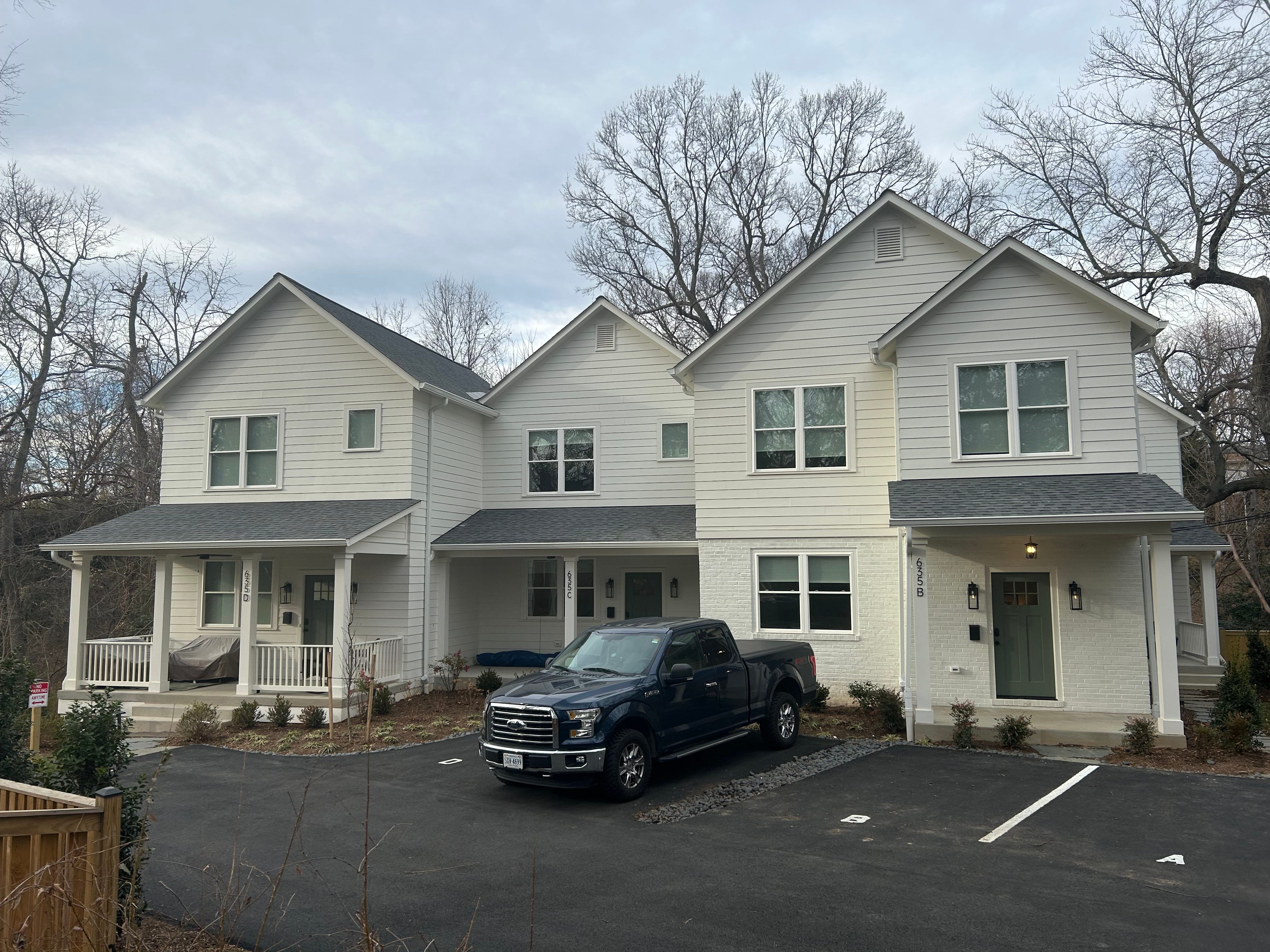
While the quadplex appears to be the one reported in the public information, nothing more specific is disclosed. The city’s online descriptions of ZFH’s effects could be significantly more informative.
The city’s website includes a Zoning for Housing Implementation Table that contains construction and approval information on projects authorized under seven zoning reforms. Here is the table:
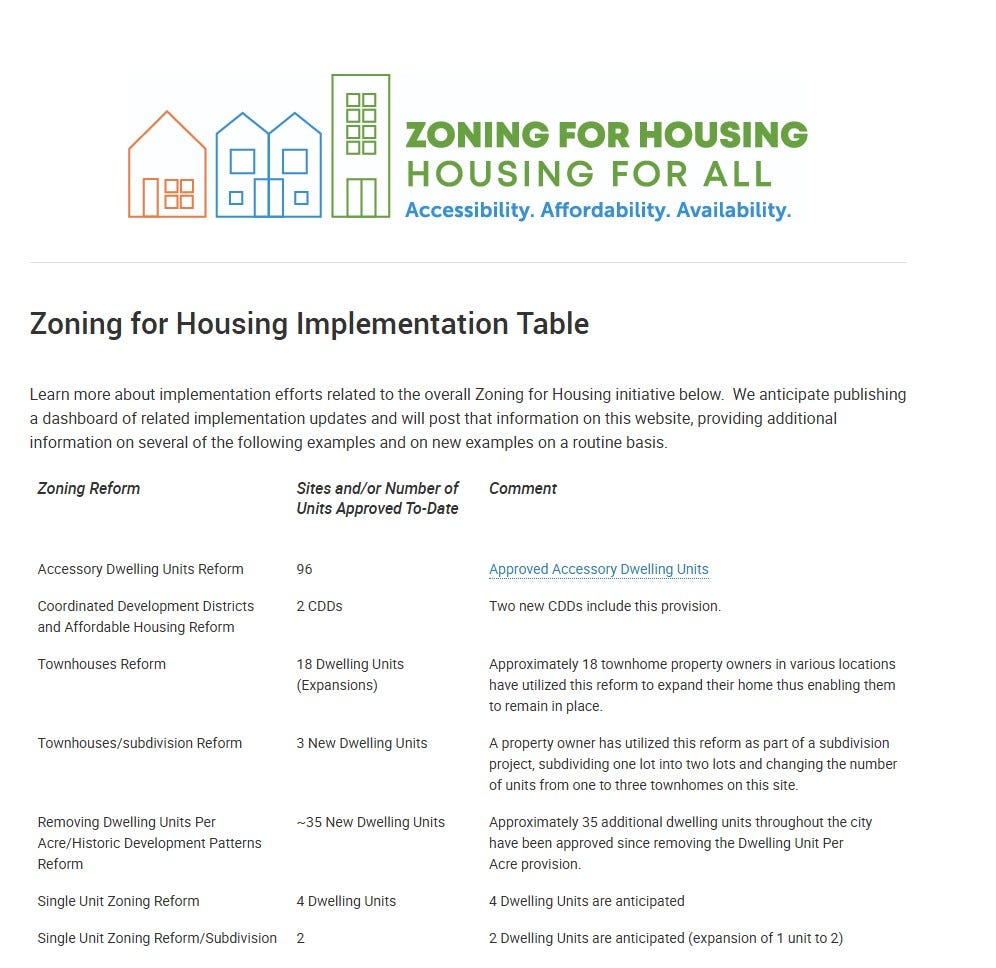
Unfortunately, the ZFH Implementation Table is opaque. For example, in the Single Unit Zoning Reform category, are the “4 Dwelling Units” under “Sites and/or Number of Units Approved To-Date” the same four units as the “4 Dwelling Units are anticipated” under “Comment”? Are the “4 Dwelling Units” the quadplex on Upland Place? These questions show that the table could be improved.
The table would be substantially more useful if it included an interactive map that locates projects by address and gives other information showing the effects of ZFH, including, for example, photographs of projects, lists of permits applied for and issued, references to zoning code sections that authorize projects, and lists of completed projects.
Making the table more useful is not beyond Alexandria’s reach. Arlington County enacted zoning amendments known as the Expanded Housing Option program, also called the “Missing Middle” initiative. Like ZFH, the EHO amendments were the subject of litigation. Arlington’s website provides extensive information about the EHO program including links to photo galleries organized by neighborhood, a permit tracker, and more. Arlington’s EHO tracking information can be seen
A pre-ZFH zoning change allowed the construction of Accessory Dwelling Units, or mini-homes external to, or inside, a main single-family residence. The City Council approved ADUs to increase the city’s housing supply. The table contains a link to the city’s updated list of approved ADUs (currently at 96 units) by date of approval, street address, and whether the unit is external or internal to the main residence. More such links to next-level data in the ZFH Implementation Table, or a true electronic dashboard that links to and tracks source data, would improve public understanding.
There is nothing I know of that precludes public disclosure of the addresses and pictures of buildings approved and constructed under the city’s permit processes. While a notice of appeal has been filed in the ZFH litigation, that a matter is in litigation should not delay the communication of the facts on the ground, or that will be on the ground soon.
An Alexandria elected official wrote me:
There seems to be a perception among those who were opposed to the legislation that the implementation is happening too fast. On the other side, we have a number of residents who feel it’s not moving fast enough. It would be helpful for the community to better understand what data each side is currently using, and what data would be helpful for both to better understand the true picture.
The time to develop complete and rigorous online disclosure of ZFH’s effects is now, or at least soon. The most unfortunate question in civic affairs may be, How did things get this way? We can reduce the probability of that question being asked in the future through better disclosure in the present.
ZFH’s zoning reforms may ultimately be good, bad, or indifferent. In any case, Alexandria would benefit from a more complete picture of the facts about their effects.
The writer is a former lawyer, member of the Alexandria School Board from 1997 to 2006, and English teacher from 2007 to 2021 at T.C. Williams High School, now Alexandria City High School. He can be reached at aboutalexandria@gmail.com and free subscriptions to his newsletter are available at https:/aboutalexandria.substack.com.