

     Ozymandias (1817) by Percy Bysshe Shelley
I met a traveller from an antique land,
Who said: "Two vast and trunkless legs of stone
Stand in the desert...Near them, on the sand,
Half sunk a battered visage lies, whose frown,
And wrinkled lip, and sneer of cold command,
Tell that its sculptor well those passions read
Which yet survive, stamped on these lifeless things,
The hand that mocked them, and the heart that fed:
And on the pedestal, these words appear;
My name is Ozymandias, king of kings;
Look on my works, ye mighty and despair!"
Nothing beside remains. Round the decay
of that colossal wreck, boundless and bare
The lone and level sands stretch far away.
The concern about the Trump Administration’s damage to long-standing American ideals and principles is well-founded. The harm includes the trashing of the First Amendment, transforming the Justice Department into a means of personal revenge, inhumane and lawless immigration enforcement, the abandonment of science and research-based health policies, attacks on American universities, and the oppressive exercise of Executive power in many other contexts.
There is also widespread dismay about the damage that the Administration has done, or plans to do, to Washington, D.C.’s built environment. There are deep concerns about the soon to be closed Kennedy Center, the 90,000 square foot, $400 million ballroom under construction on the site of the White House’s former East Wing, the changes to the reflecting pool on the National Mall, and the takeover of the District of Columbia’s municipal golf courses.
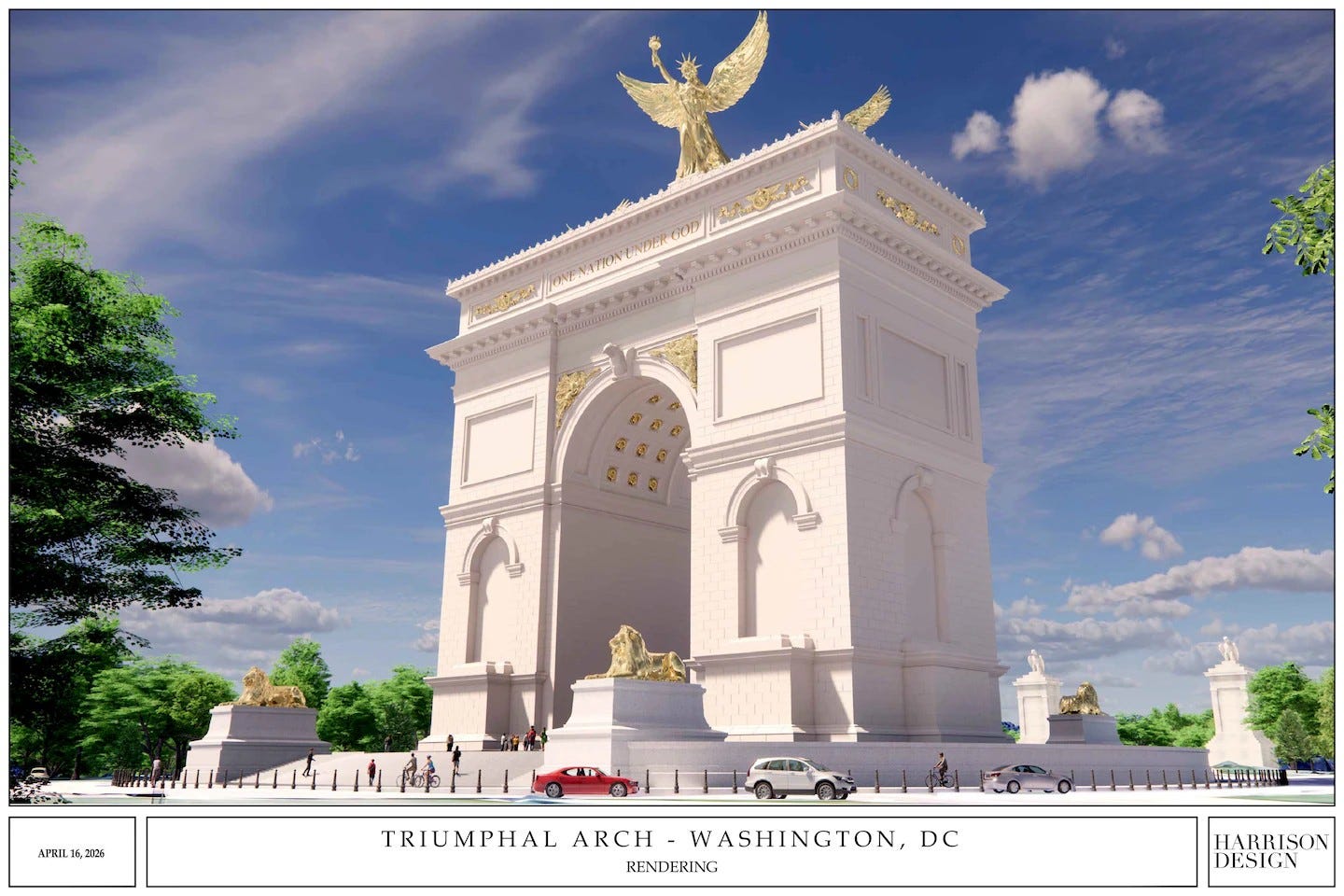
The reaction has been especially negative to the plans announced for a 250-foot arch in Memorial Circle at the foot of Memorial Bridge on the Virginia side.
A withering April 20, 2026 column by The Washington Post’s art and architecture critic, Philip Kennicott, generated 1,900 comments. The vast majority of the comments were negative. The column can be read
On April 21, 2026 Adam Gopnik, writing in The New Yorker, was similarly critical of the proposed arch. Gopnik described the arch’s antecedents in Paris, particularly the smaller 164-foot Arc de Triomphe on the Place Charles de Gaulle.
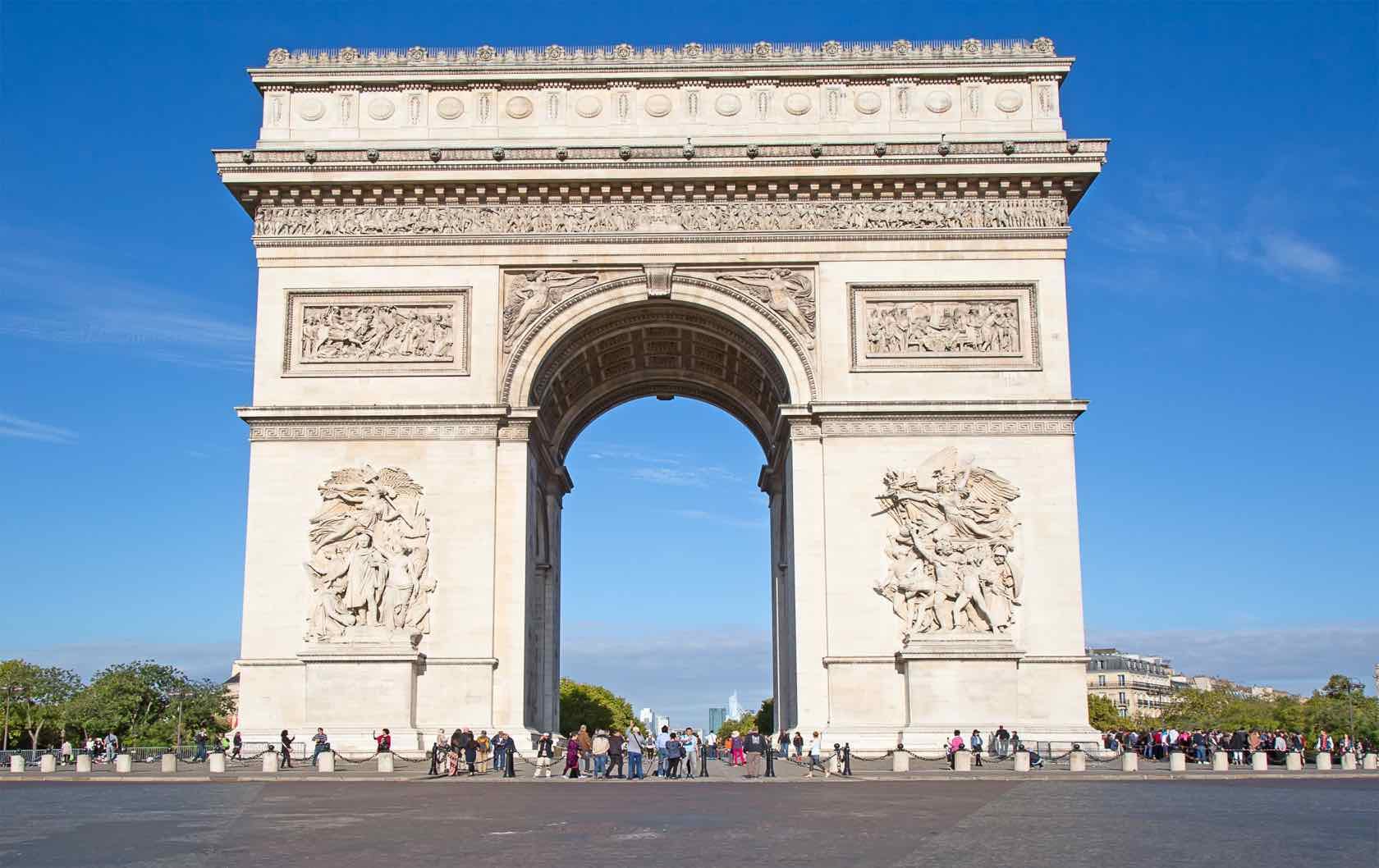
Gopnik’s piece can be seen
What follows does not restate the critiques of Messrs. Kennicott and Gopnik about the Trump Administration’s proposed arch. Instead, this post explores why authoritarian-sponsored architecture and public art, such as the proposed arch, are usually unappealing and often cringe-inducing.
We vary in our tastes and art appreciation. Thankfully, we do not all like the same things. Even so, buildings and monuments sponsored by other authoritarian regimes suggest that the Administration’s proposed arch will be an eyesore at a site that should exemplify national pride and remembrance of sacrifice.
Architecture and Sculpture Designed to Impress Tends to Fail
Starting at an extreme, probably no country has been more forceful in using public art to promote an authoritarian system and principles than North Korea.
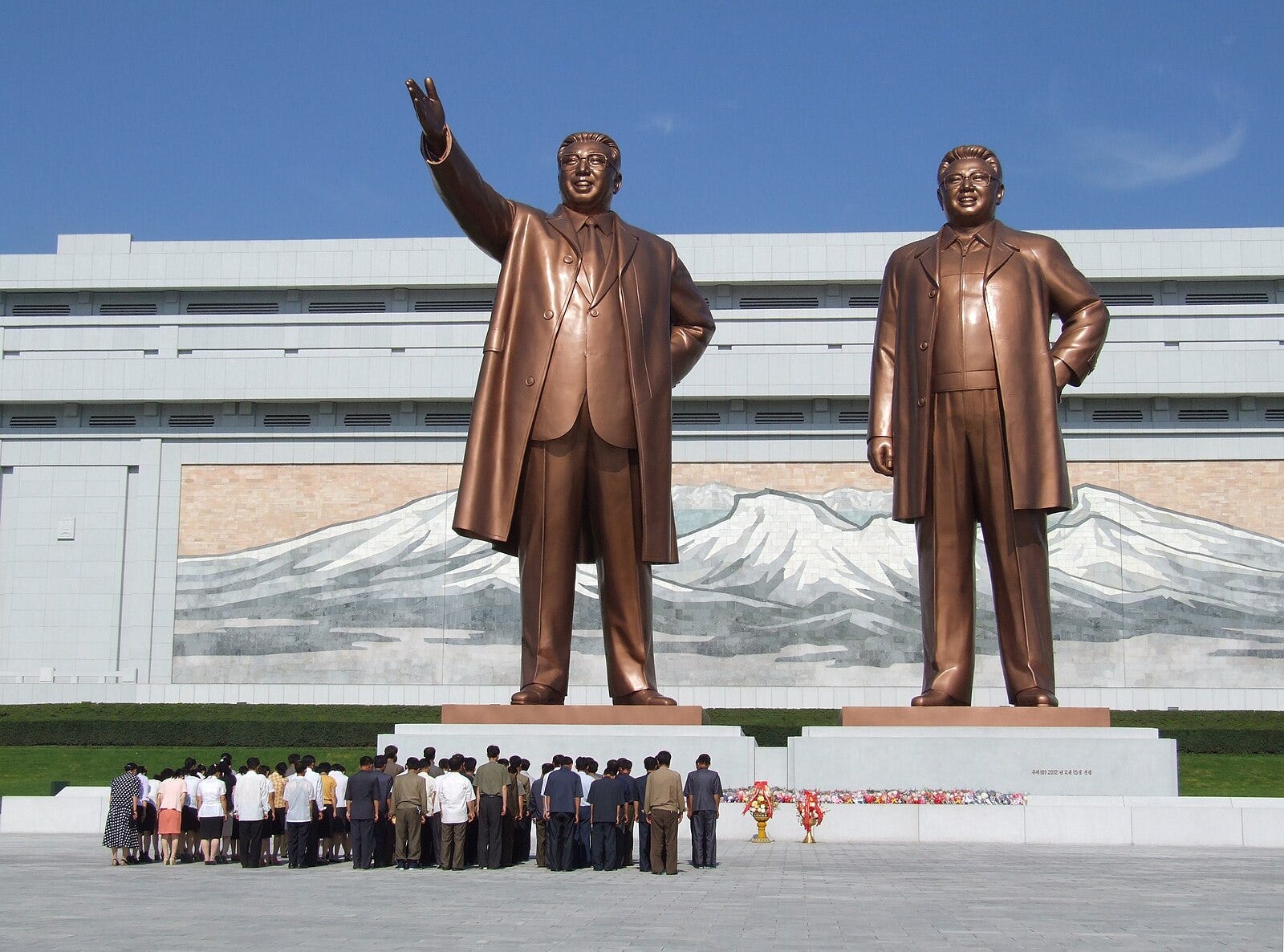
These enormous glistening statues of Kim Jong Il and his father, Kim Il Sung, at the Mansu Hill Grand Monument in Pyongyang signify the cult of personality and the absolute control of North Korea’s ruling family. Like Trump’s proposed arch, the figures are monumental—the heads of the obedient visitors do not even reach the feet of the 66-foot tall bronze Kims who dominate a background mural of mountains.
There is a long tradition of figures representing the artist’s patrons appearing in paintings and murals. However, the massive Kim statues are about nothing except the authoritarian sponsors of the work. Disproportionately huge scale, especially when combined with a focus on an authoritarian figure, obscures one of the key things that makes art work: the potential connection the art provides to shared human experiences or emotions.
No American jurisdiction has been more sensitive to building scale than the District of Columbia. The federal Height of Buildings Act of 1910 limits buildings in the District to 130 feet, in part so that the monuments and federal buildings are not obscured by commercial structures. The proposed arch is just across the Potomac River in Virginia. The arch is out of scale with everything around it, including other monuments and memorials. For example, the arch is two and a half times the height of the 99-foot Lincoln Memorial at the other end of Memorial Bridge on the DC side.
On April 29, 2026, The New York Times published a startling 3-D analysis of the effects of the arch from several vantage points. The analysis can be seen
A Masters of Fine Arts degree is not necessary to understand scale; we understand scale intuitively. Enormous scale in sculpture or buildings created in service of authoritarianism turns off many people
Moreover, prominent design features of the proposed arch refer directly to President Trump and, in particular, his use of gold to create an impression of authority. This rendering shows some of the dimensions of the proposed arch.
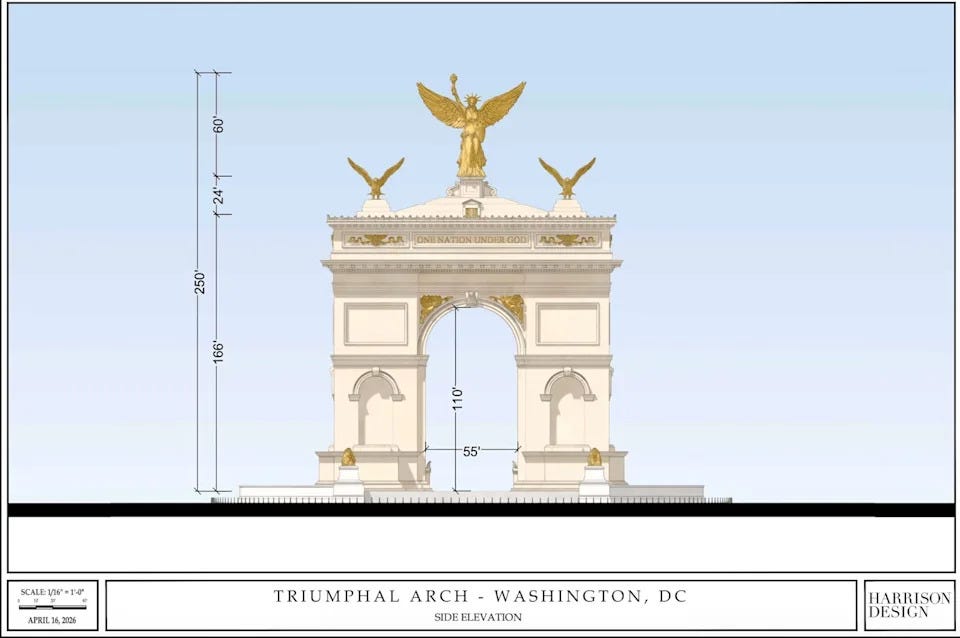
The top 84 feet of the arch is taken up with winged gold figures on pedestals. There are also four gold lions at the base of the arch. President Trump has also used gold extensively in the Oval Office and the West Wing of the White House. The arch’s designer had his client or patron, President Trump, in mind in the design’s lavish use of gold.
Art is an Imperfect Method for Authoritarian Messaging
Authoritarians use public art and architecture to promote themselves. With this as a central purpose, the probability that a sculpture or building will trigger a positive aesthetic reaction is reduced dramatically. For example, it can be jarring to encounter a building or sculpture in Italy from the Mussolini era.
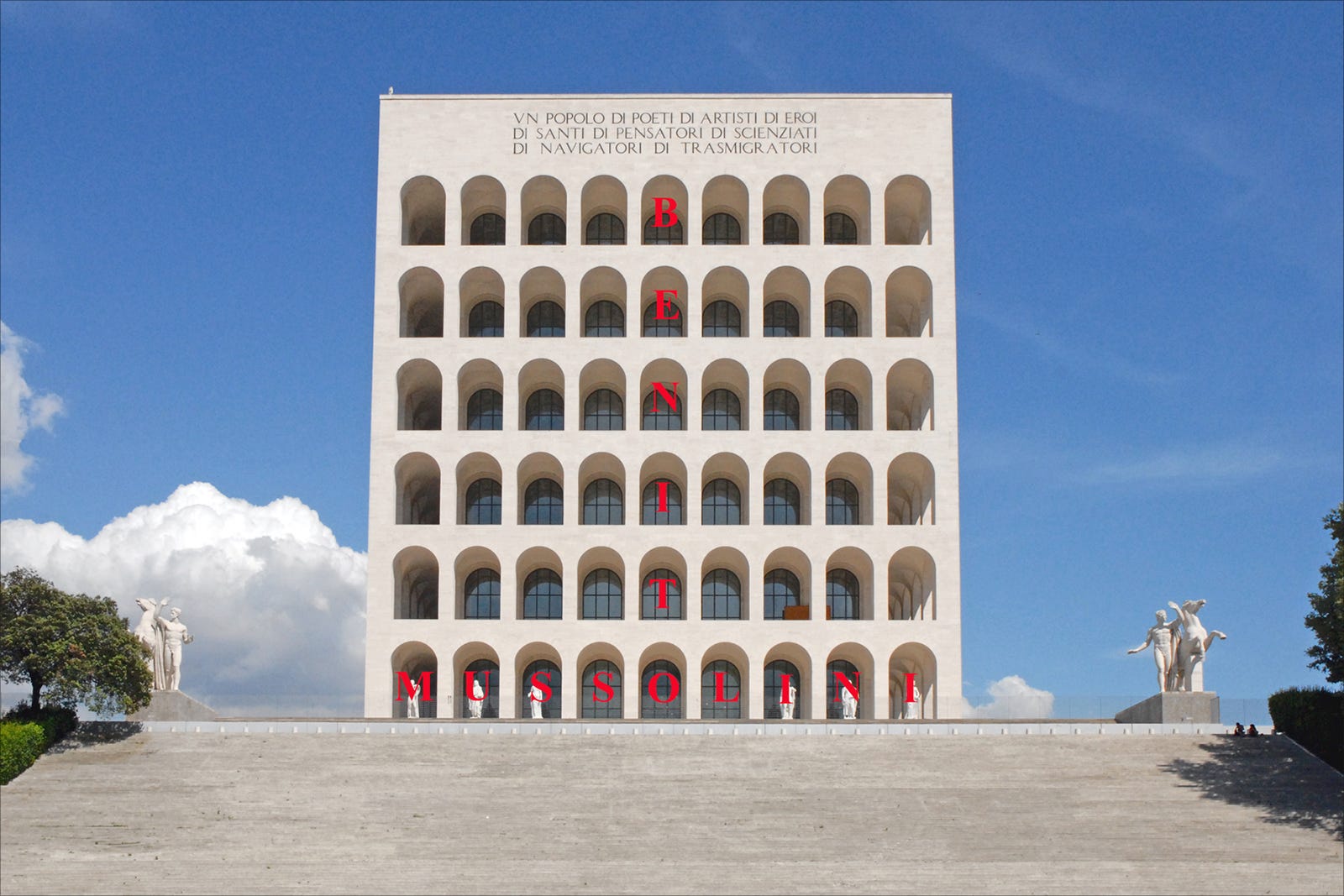
This is the Palazzo della Civilta Italiana, known as the “Square Colosseum” in Rome. Benito Mussolini commissioned the building for the 1942 World’s Fair which was cancelled because of World War II. The building tries to connect to the grand architecture of ancient Rome, particularly the Colosseum. The rigid repetition of the arches and the symmetry are intended to glorify the regime. The red letters were added to this photograph to show the intended glorification of Mussolini in the number and arrangement of arches on the building’s facade.
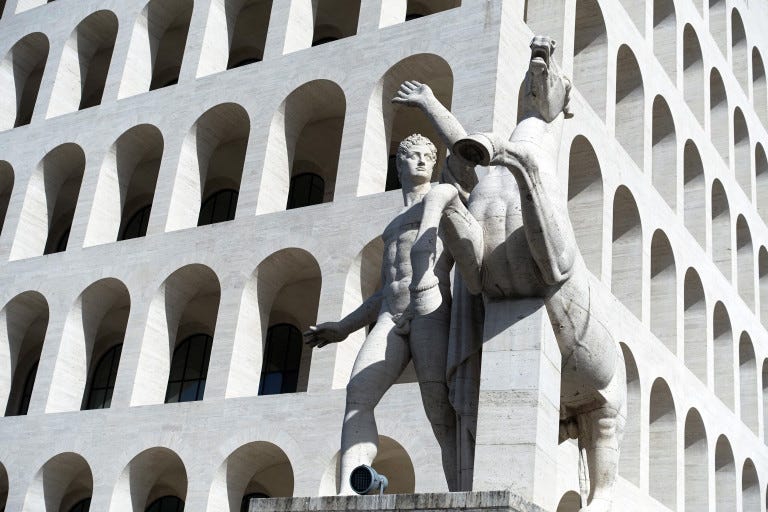
The repetition of the arches contrasts with the flanking muscular heroic figures engaged in mastering or controlling horses.
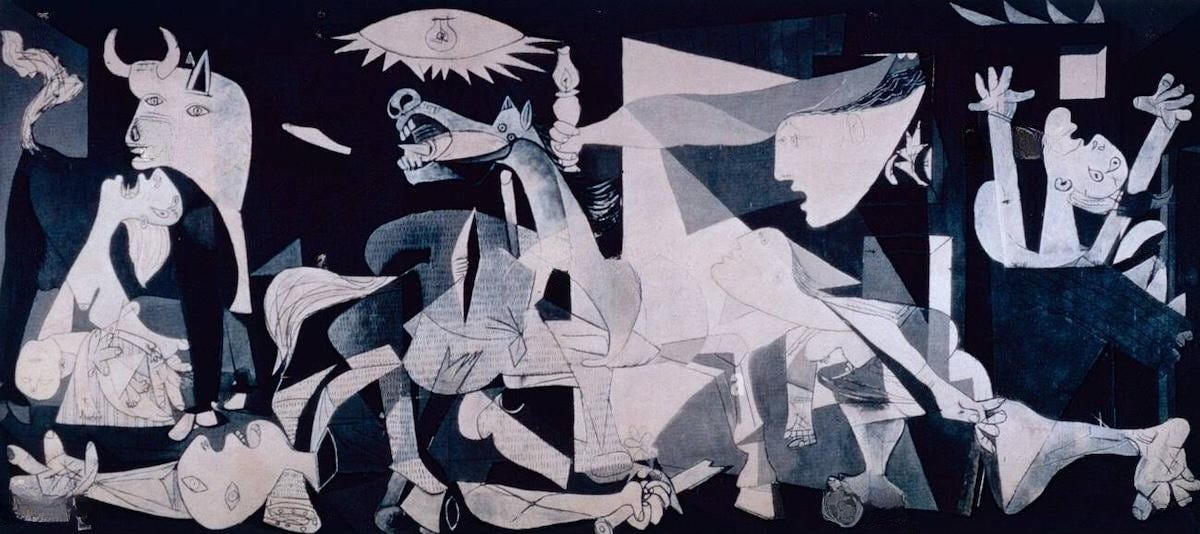
Art has long been used to express values or protests. A prime example is Pablo Picasso’s Guernica, which unforgettably portrays the horrors of the Spanish Civil War. The problem with art and architecture created to confirm or magnify an authoritarian system or leader is that there are no, or almost no, values or principles other than fidelity to authority.
We honor Lincoln, Jefferson, Washington, King and others, because of what they did for the United States, not because they inspired blind obedience. None of Washington, D.C.’s monuments or memorials were built by politicians then in power to aggrandize themselves.
The Administration has attempted to link the proposed arch to the 250th anniversary of the signing of the Declaration of Independence and general American historical glory. Most people who give the matter any thought conclude that the arch is about its chief proponent, President Trump.
Authoritarian Buildings and Sculptures Can Be Undermined in Important Ways
While authoritarian governments can control architectural and public art designs, they cannot control the reaction to those designs. There are prominent instances where the public has rebelled against authoritarian public art.
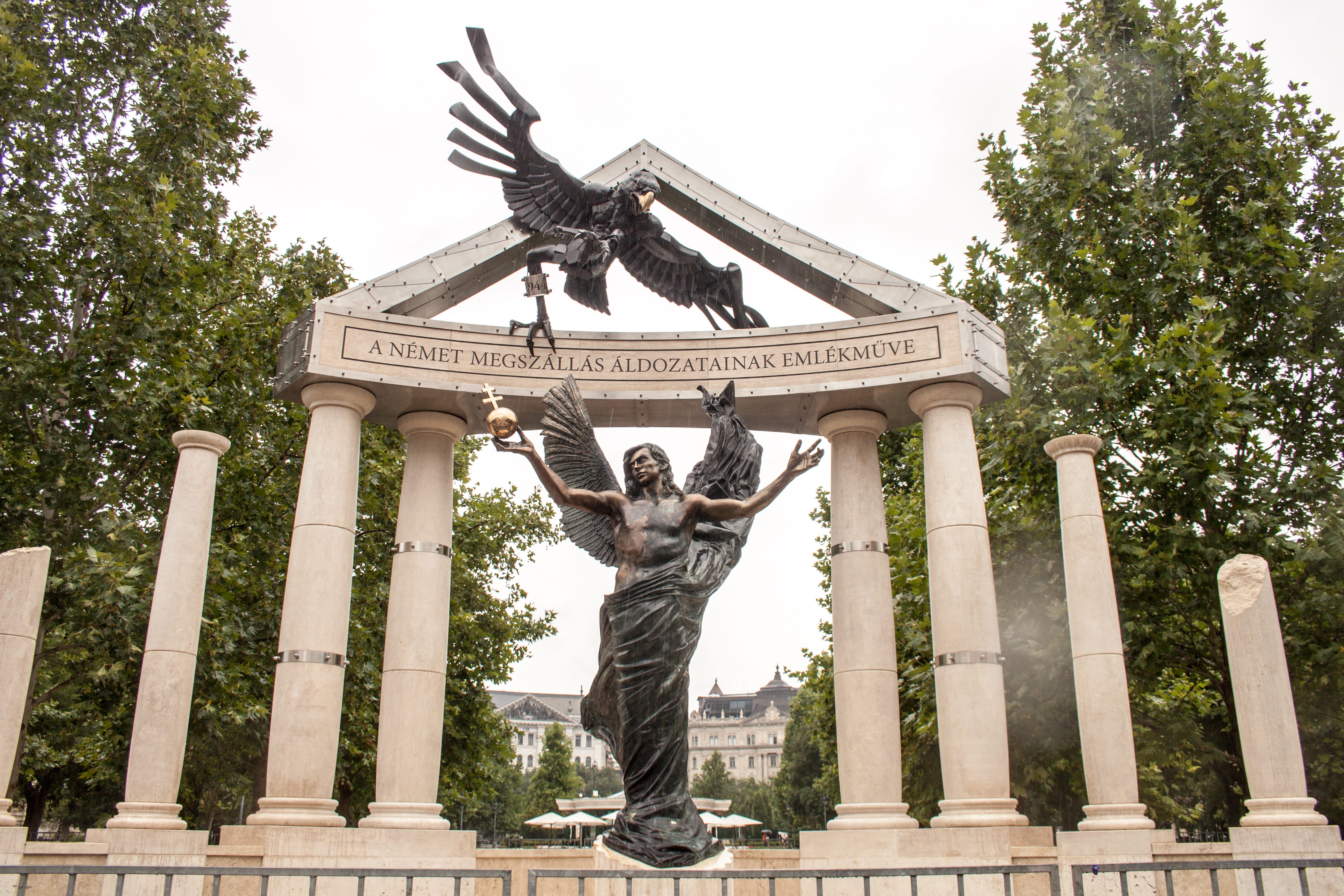
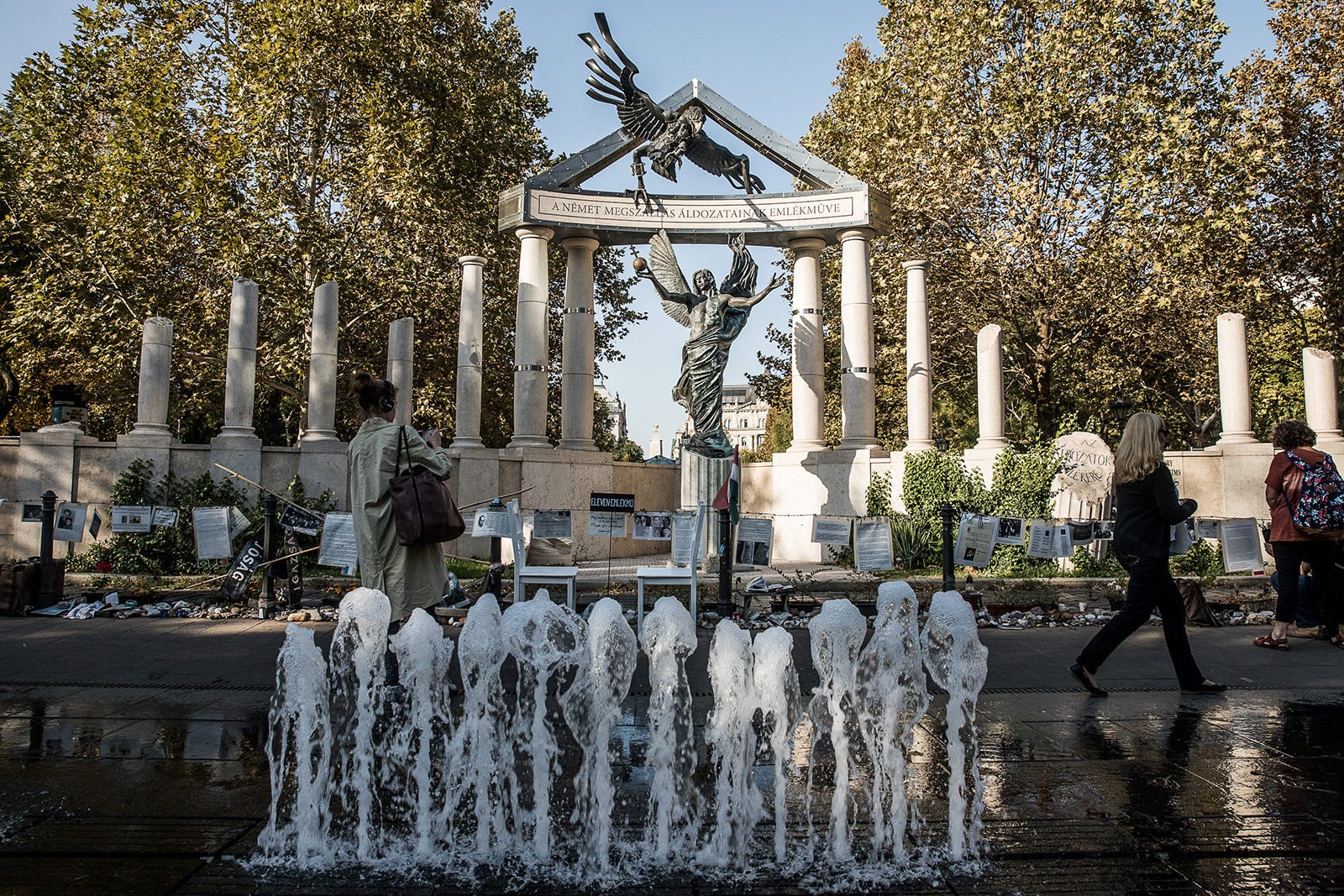
This Monument to the Victims of the German Occupation in Budapest, Hungary was built by Victor Orban’s government in 2014 in an attempt to rewrite the history of the German takeover of Hungary on March 19, 1944.
The monument shows the German imperial eagle with a leg band that reads “1944” descending on the Archangel Gabriel representing innocent Hungary. The backdrop of damaged and repaired columns reflects the harm to civilization caused by the Nazi invaders.
The memorial seeks to absolve Hungary of any complicity in World War II or the Holocaust. In fact, during the war hundreds of thousands of Hungarian Jews were persecuted and deported. Hungarians were often complicit. The memorial promotes a victimhood narrative as a substitute for unflattering historical facts.
Hungary’s citizens have been decidedly negative about the memorial. This picture shows testimonials and personal accounts that ring the base of the monument that conflict with its intended message of a blameless Hungary.
The respectful offerings and mementos that appear at the base of the black granite name-bearing panels at the Vietnam Memorial on the National Mall are another example of people engaging with public art according to their beliefs and experiences, not as dictated or intended by governments or authority figures. Here, visitors are adding items to further honor those who died in the the Vietnam War.

A Few Final Thoughts
Could the Trump Administration’s proposed arch become a target for those who disagree with its messaging or the Administration’s policies?
No prediction is offered here, except that we can expect the unexpected. “If you build it, they will come,” is a common misquotation from the movie Field of Dreams, but it might apply to Trump’s proposed arch and not in a good way.
One thing is certain: the proposed arch may be designed to impress, but how the public will react to it is not controllable by anyone.
Your comments are very welcome.
I remember Ozymandias from high school and the line “Look at my works, ye mighty and despair!” perfectly captures Trump’s pathological need for adulation.
Great article. Of all the unseemly things this Administration has done, the Arch of TRiUMPh would be the most enduring.